

Introduction
A well-designed pneumatic system is more than just an air compressor, air receiver tank, and air treatment components. The efficiency and longevity of the system also depend on piping and tubing setup, airflow control, and noise management.
In Part 3 of this series, we will explore:
- Piping & Tubing – How proper selection and design contribute to air drying and efficient airflow.
- Pneumatic Actuators – Converting compressed air into mechanical motion.
- Directional Control Valves – Managing and directing airflow for precision control.
- Exhaust Mufflers – Reducing noise and backpressure in pneumatic systems.
By understanding these components, businesses and engineers can design optimized pneumatic systems that minimize energy loss, improve performance, and reduce maintenance needs.
1. Piping & Tubing: The Foundation of Efficient Pneumatic Systems
Why Piping and Tubing Matter in Pneumatics
The layout and material of pneumatic piping and tubing impact air quality, pressure regulation, and system efficiency. Poorly designed piping can lead to pressure drops, moisture buildup, and energy loss, negatively affecting system performance.
How Piping and Tubing Aid in Air Drying
A well-designed pneumatic piping network can help in moisture removal, reducing the workload on air dryers. Key techniques include:
- Sloped Piping Design – Installing main air lines at a downward slope directs condensed water to drain points, preventing moisture from reaching end-use equipment.
- Drip Legs & Automatic Drains – Placing moisture separators at low points in the piping helps collect and drain condensate.
- Loop Systems Over Dead-End Runs – A looped air supply reduces pressure fluctuations and water accumulation.
Types of Pneumatic Piping & Tubing
| Material | Advantages | Best Use Cases |
|---|---|---|
| Aluminum Piping | Lightweight, corrosion-resistant, smooth airflow | Industrial automation, clean air systems |
| Stainless Steel Piping | High strength, ideal for harsh environments | Food processing, pharmaceutical, corrosive settings |
| Copper Tubing | Excellent for moisture resistance, long lifespan | Laboratories, high-purity applications |
| Nylon & Polyurethane Tubing | Flexible, impact-resistant, easy installation | Small-scale automation, robotic applications |
Best Practices for Piping & Tubing in Pneumatic Systems
- Use the Correct Pipe Diameter – Smaller pipes create higher pressure drops, reducing efficiency.
- Minimize Sharp Bends – Smooth, gradual bends improve airflow and prevent turbulence.
- Proper Support & Clamping – Prevents vibration and movement that could lead to leaks.
- Routine Inspection & Maintenance – Checking for leaks and moisture buildup ensures system efficiency.
2. Pneumatic Actuators: Converting Air Pressure into Motion
What is a Pneumatic Actuator?
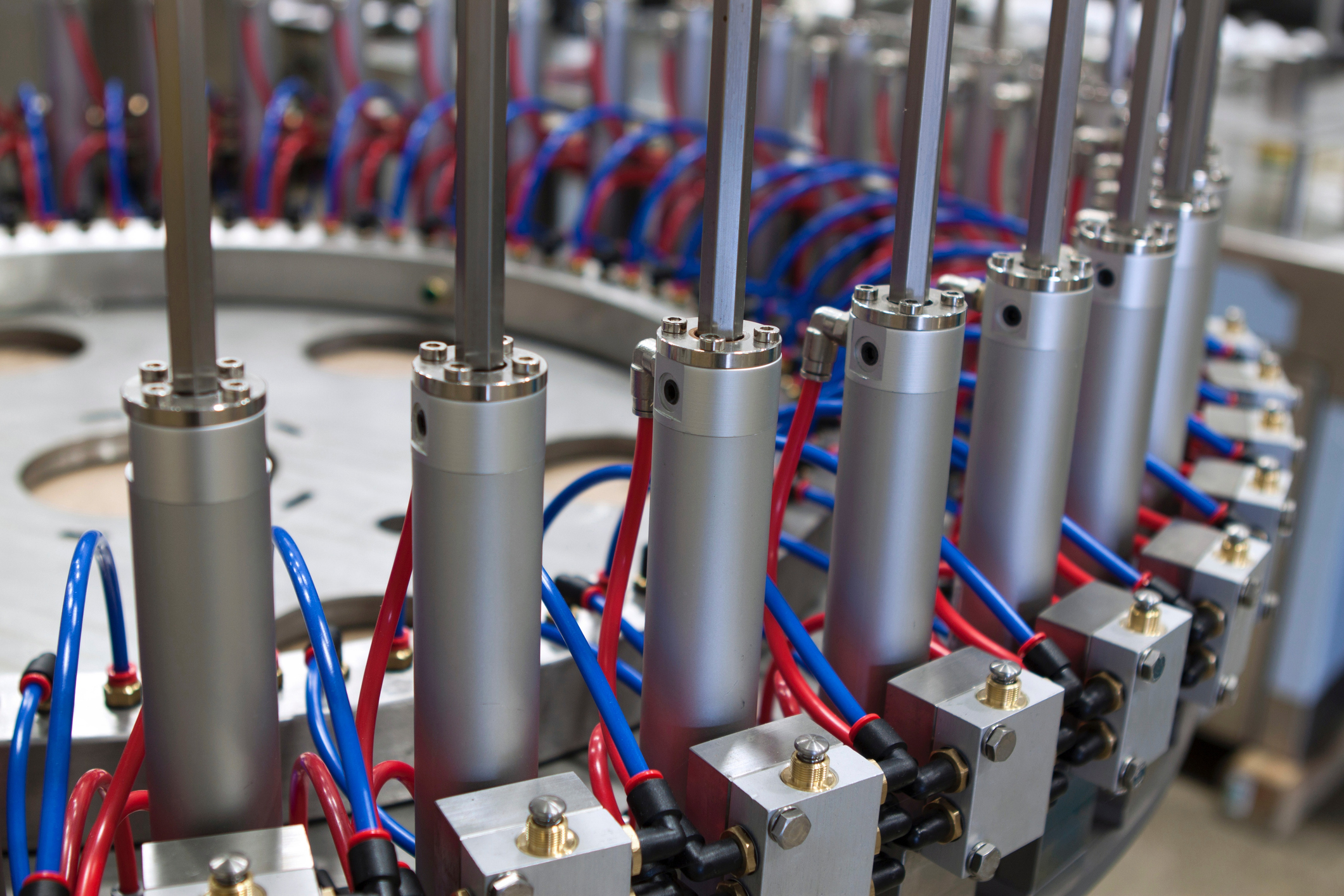
A pneumatic actuator is a device that converts compressed air energy into mechanical motion. It is one of the most essential components in a pneumatic system, driving linear or rotary movement in industrial automation, robotics, material handling, and other mechanical applications.
Types of Pneumatic Actuators and Their Applications
1. Linear Pneumatic Actuators (Cylinders)
Linear actuators produce straight-line motion, which is commonly used in industrial automation, robotics, and machinery.
(a) Single-Acting Pneumatic Cylinders
- Uses compressed air to move in one direction, with a spring return mechanism for the opposite movement.
- Best for: Clamping, lifting, and pressing operations.
(b) Double-Acting Pneumatic Cylinders
- Uses compressed air for both extension and retraction, offering higher force output and precise control.
- Best for: High-speed automation, robotic arms, conveyor systems.
(c) Rodless Pneumatic Cylinders
- Instead of using an external piston rod, motion is achieved inside the cylinder body.
- Best for: Compact machinery, automated sliding doors, and conveyor belt systems.
2. Rotary Pneumatic Actuators
Rotary actuators convert compressed air into rotational movement, allowing precise positioning and turning operations.
(a) Rotary Vane Actuators
- Best for: Lightweight clamping systems, indexing tables.
(b) Rack and Pinion Rotary Actuators
- Uses a piston-driven rack and pinion gear system to produce high-torque rotational movement.
- Best for: Heavy-duty industrial applications, such as robotic arms and conveyor drives.
Best Practices for Pneumatic Actuators
- Ensure Proper Lubrication – Use air lubricators to maintain a controlled oil mist in the system.
- Use Flow Control Valves – Regulating airflow prevents excessive speed, reducing mechanical stress.
- Check for Misalignment – Actuators operating under misaligned loads experience higher wear and tear.
3. Directional Control Valves: Managing Airflow for Precision Control
Common Types of Directional Control Valves
| Type | Function | Best Use Case |
|---|---|---|
| 2-Way Valves | Turns airflow on/off | Simple on/off applications |
| 3-Way Valves | Directs air to one of two outputs | Single-acting cylinders |
| 4-Way Valves | Controls extension and retraction of actuators | Double-acting cylinders |
| 5-Way Valves | Adds exhaust ports for increased flexibility | Advanced automation |
Best Practices for Directional Control Valves
- Match the Valve to the Actuator – Ensure proper airflow control for the specific actuator type.
- Use Pilot-Operated Valves for High Flow Applications – These allow for greater control with minimal manual effort.
- Regularly Inspect for Blockages – Debris in valves can cause malfunctions and inefficiencies.
4. Exhaust Mufflers: Reducing Noise & Backpressure
Why Exhaust Mufflers are Important
- Minimizing Backpressure – Prevents airflow restrictions, allowing exhaust to release efficiently.
Types of Pneumatic Exhaust Mufflers
- Standard Mufflers – Basic noise reduction.
- Sintered Bronze Mufflers – Ideal for high-durability and corrosion resistance.
- Silencer Mufflers with Filters – Trap contaminants while reducing noise.
Best Practices for Exhaust Mufflers
- Clean Mufflers Regularly – Clogged mufflers create backpressure and reduce efficiency.
- Monitor for Airflow Restrictions – Excessive noise can indicate a failing muffler or system leaks.
Conclusion
This concludes our Key Elements of Pneumatic Systems series, but stay tuned for more in-depth articles on pneumatic troubleshooting, maintenance, and advanced automation solutions.
